Sunday, July 5, 2026, Fourteenth Sunday in Ordinary Time, Year A.
Zech 9:9-10; Ps 145; Rom 8:9, 11-13; Matt 11:25-30
This week brings us some very tragic news. The Society of Saint Pius X consecrated four bishops without the permission of the Holy Father and against his explicit command. As a result, those involved have incurred excommunication.
There is a temptation whenever we hear news like this to start choosing sides, as though this were simply another argument within the Church. But schism is never a victory. It is always a wound in the Body of Christ.
Many members of the Society sincerely love the sacred liturgy. They cherish the reverence, the beauty, and the transcendence of the Church’s worship. They desire to preserve the great traditions of the Church: both those teachings that cannot change and those venerable customs that have nourished generations of saints. Many genuinely feared that after the Second Vatican Council something precious was slipping away. They saw confusion in clarity of teaching, irreverence in worship. They felt that the Church was forgetting part of her own inheritance.
That concern was not invented. Theologians and popes, including Benedict XVI, have acknowledged that many things were handled poorly after the Council. There were real wounds. Yet, we can love something deeply and still make a terrible mistake trying to protect it.
The Society’s mistake concerns a question that reaches to the very heart of the Church: Who has the authority to determine what the Church teaches?
Their reasoning sounds persuasive at first. They argue that when a crisis becomes severe enough, extraordinary measures become necessary. Priests may act as though the normal structure of authority has collapsed. Bishops may be consecrated without papal approval. Individual clergy may decide which teachings or decisions of the pope they will accept and which they will reject.
They set out to defend Tradition. No one doubts that. But instead of receiving Tradition from the Church, they increasingly found themselves deciding what counts as authentic Tradition and what does not.
Back in the early fifth century, Saint Augustine confronted Christians who believed the Church’s bishops had become compromised. During the persecutions, some bishops had failed the test of courage. The Donatists argued that these men had forfeited their ministry and that the true Church now existed only among those who had remained pure. They were convinced they alone had preserved authentic Christianity.
Augustine never excused the sins of bishops. He condemned them without hesitation. But he asked a deeper question: Who gave you the authority to decide who belongs to Christ’s Church?
Unity, Augustine insisted, is not optional. It belongs to the very nature of the Church. The Church is more than a collection of correct ideas. Christ gave us a family before He gave us rules. Once communion is broken, the defense of genuine truth falters, because truth cannot stand apart from love.
That question continues. Every generation of Catholics must answer it. What do we do when bishops fail? When scandals erupt? When confusion enters the Church? Do we remain in the Barque of Peter, working and praying for her renewal, or do we convince ourselves that fidelity requires standing apart?
A single question underlies this entire tragedy. Did Vatican II contradict what the Church had taught before it?
The Society believes it did. They argue that previous popes taught that error has no rights and that Catholic nations should publicly favor the true faith. Therefore, they conclude that the Council abandoned tradition.
But that is not what the Council taught. Dignitatis Humanae does not say all religions are equally true. It does not place truth and error on the same level. Rather, it teaches something deeply rooted in the Gospel: faith cannot be compelled by force.
The Council was speaking into a century marked by dictatorships and communist regimes that imprisoned consciences and coerced belief. The Church, speaking to those governments, insisted that every human person must remain free to seek the truth and embrace it without coercion, because love cannot be forced.
Every pope since the Council has read these teachings as one, not as a contradiction. They address different historical circumstances while expressing the same faith. When an individual claims the authority to declare a contradiction where the Church herself declares continuity, the final authority has shifted from the Church to oneself. That is the real break.
Today’s Gospel holds two ideas together.
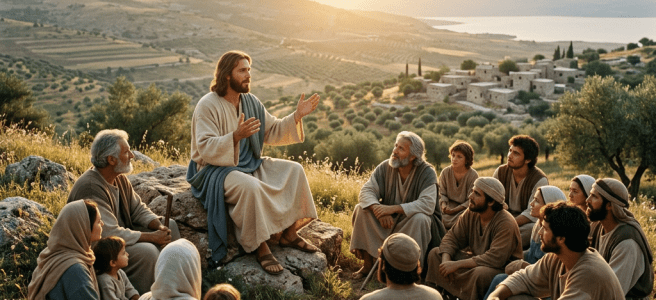
Jesus declares: “All things have been handed over to me by my Father.” That is a divine claim of authority and power. No prophet ever spoke like that. No rabbi ever dared speak like that.
He follows with the statement, “Learn from me, for I am meek and humble of heart.”
The Greek word translated as “meek” is praus. To modern ears, it sounds like weakness. But that is not how it is used in the Scriptures. Throughout the Old Testament, the meek are those who have placed themselves in God’s hands. They do not seize power or force their own way. They trust that the Lord will vindicate them. That is why the Psalms say the meek shall inherit the land, and why Jesus repeats that promise in the Beatitudes.
Jesus never compels belief. He speaks the truth without hesitation, but He always leaves room for a free response. He calls. He invites. He waits.
That same pattern lies behind the Church’s teaching on religious liberty. The Church does not weaken the truth by refusing to impose it. She follows the Lord, ceaselessly proclaiming the truth, yet always respecting the freedom of the human heart to receive or reject Him.
We know that truth itself can be mishandled. Every one of us has met someone who could explain the faith flawlessly and yet somehow left others feeling smaller instead of loved.
Winning an argument has never been the same thing as winning a soul.
There is also the opposite danger. The truth is we are products of our culture, and most of us are far more likely to drift in the opposite direction. To place love against truth. It is easier to avoid difficult conversations, easier to leave people where they are, easier to call silence compassion. Yet love that never risks telling the truth becomes mere sentiment. It may soothe for a moment, but it cannot lead anyone to freedom.
Let us pray that those who have separated may one day be restored. Let us pray that we ourselves never confuse zeal with pride, nor charity with compromise. And let us ask the Lord to give us hearts like His: strong enough to proclaim the truth without fear, humble enough to proclaim it with love.
May the Lord teach us to speak as He spoke, to love as He loved, and to remain, always, in the unity of His Church.


