Palm Sunday of the Lord’s Passion — March 29, 2026 | Lectionary Year A
Matthew 21:1–11 | Isaiah 50:4–7 | Psalm 22:8–9, 17–18, 19–20, 23–24 | Philippians 2:6–11 | Matthew 26:14–27:66 (shorter form: Matthew 27:11–54)
The Roman Empire knew exactly how power sounded: trumpets, hooves, the rattle of armor, and the silence of people who knew better than to speak.
Matthew tells us that when Jesus entered Jerusalem, the whole city shook — ἐσείσθη (21:10). He repeats that exact verb at the Crucifixion and at the empty tomb. The repetition forms a “literary pattern.” Matthew connects these three moments as inseparable. Palm Sunday is the first tremor. Something deep in creation begins to move.
And what causes it? Not a warhorse. Not a chariot. Not the Roman Triumph; glittering banners, blaring trumpets, chained captives, and generals who have spent their careers perfecting the look that says: we are victorious, and you are going to remember this.
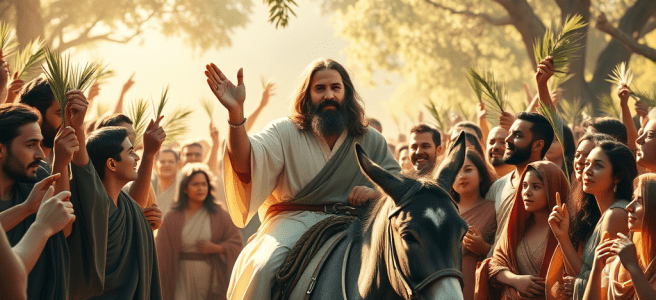
No. Matthew gives us a donkey. And her colt.
Matthew is the only evangelist who includes both animals. He is not confused. Zechariah’s poetry uses parallel lines to describe one animal but Matthew incorporates both, because he wants us to see the full shape of what God is doing.
This is Matthew’s signature move: how God acted in the past is manifested fully in Jesus in the present. Both the donkey and the colt offer a rich symbolism to understand what Jesus is doing. In the ancient Near East, riding a donkey was itself a statement. A warhorse announces conquest. A donkey announces peace. A servant-king. Πραΰς — meek. The very word Jesus uses in the Beatitudes: Blessed are the meek, for they shall inherit the earth.
Which raises the obvious question: if the donkey means peace, what does the colt mean?
The colt had never been ridden. In ancient Israel, that meant one thing: this animal was set apart, consecrated, reserved for sacred use. It had never carried a single amphora of olive oil. Not one basket of figs. It was waiting for exactly this moment, which is either profoundly theologically significant or the most patient donkey in recorded history.
Probably both.
The crowd wants a liberator on a stallion. God sends a Savior on a borrowed pair of donkeys. The world expects trumpets. God lets power enter quietly, shaking the earth.
The crowd asks, “Who is this?” They identify him correctly as a prophet from Galilee, which is a bit like identifying Michelangelo as a man from Tuscany who did some painting. Technically accurate. Woefully incomplete.
The crowd waves their palms. They do not yet understand the tremors.
Palm Sunday is the first shockwave: the King enters in peace, dies in love, rises in glory. Three tremors. One event. The world transformed.
Hosanna. Blessed is he who comes in the name of the Lord.
Even if he arrives — as God so often does — not at all the way we were expecting.

 The Joy of the Gospel